Your worth remains.
Your choices matter, and so do you. Taking responsibility can include acknowledging harm, making changes, and asking for help without making a mistake a verdict on your value.
 POWERED BY COUNTERFEIT EMOTIONSStart recovery →
Our story & our approach
Our goal is freedom from the need to turn to pornography. Through Counterfeit Emotions, we invite men to understand what is happening beneath the behavior and practice a life with greater honesty, connection, and purpose.
This is a possibility to work toward, with support and responsibility along the way.
The person behind the program
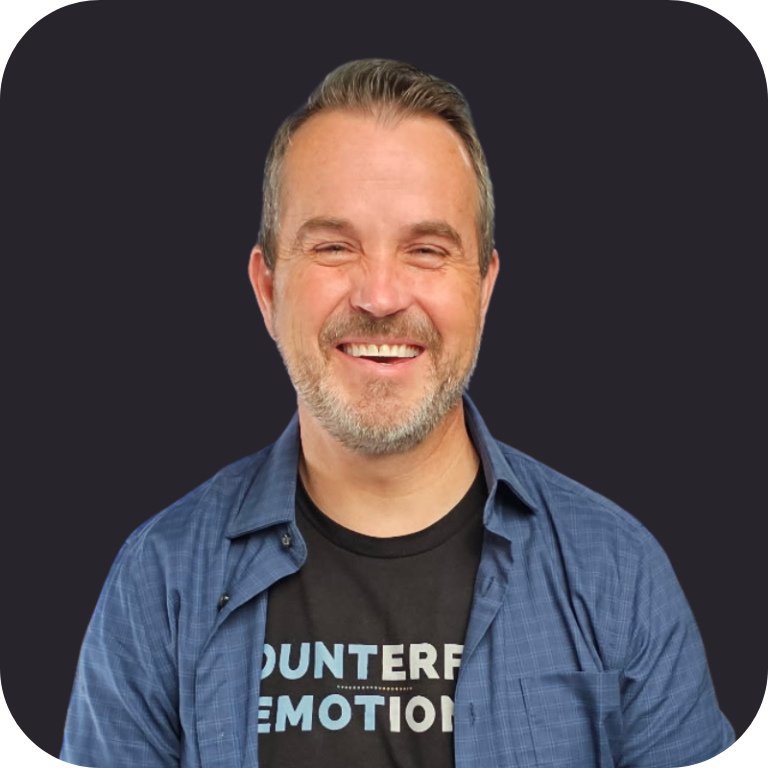
Curtis brings personal recovery experience, coaching, and a background in leadership to this work. He has spoken openly about his own struggle with pornography and the shame and isolation he experienced.
After years in programs focused on sobriety, he began exploring the beliefs and emotional patterns beneath his behavior. That search helped shape the approach he now shares with men through Counterfeit Emotions.
He is also an author and the host of the Counterfeit Emotions Podcast. His work invites honest conversations about emotions, connection, and the choices people want to make.
Curtis serves as a coach and educator. He is not a licensed therapist.
How this work began
Curtis’s work in Counterfeit Emotions also grew from a deeply personal loss. After a close friend died by suicide, he redirected his writing and teaching toward helping people understand their emotions and connect more honestly with themselves and others.
His own recovery experience brought a particular question into focus: what happens before someone turns to pornography, and what are they hoping it will provide?
Recovery Not Sobriety brings that focus into a nine-week learning experience. Men explore Counterfeit Emotions dyads, practice what they learn, and grow alongside a consistent group.
The aim reaches beyond counting days. We want men to work toward no longer relying on pornography for relief or escape, while taking responsibility for their choices and their impact on others.
Adapted from Curtis’s published story on Counterfeit Emotions and his Recovery Program introduction.
What guides us
Your choices matter, and so do you. Taking responsibility can include acknowledging harm, making changes, and asking for help without making a mistake a verdict on your value.
Explore what you were feeling before the urge and what you hoped pornography would offer. Curiosity creates room for an honest look at your choices and another way to respond.
Understanding is a beginning. Small, deliberate choices help bring that learning into stress, loneliness, relationships, and the moments when old patterns show up.
Men from different walks of life learn together, ask for support, and encourage one another. Brotherhood offers connection and accountability while each man owns his work.
Care can include honest conversations and firm boundaries. Partners and family members have needs of their own; they are not responsible for managing another person’s recovery.
Men of any faith or no faith are welcome. God and spiritual connection may be discussed, but belief in God, religious affiliation, or adopting a belief is not required.
The Counterfeit Emotions approach
We use pairs of ideas, called dyads, to explore distinctions that can change how you see a familiar experience. Guilt versus shame, for example, invites responsibility for a choice without condemning your worth. Kind versus nice explores caring for others while staying honest about needs and boundaries.
These distinctions are prompts for reflection and practice. Your feelings deserve attention; you do not have to judge yourself for having them.
Notice the feelings, beliefs, and situations that surround the urge. Explore the relief, comfort, escape, or connection you may be seeking.
Recognize what matters to you. Practice taking responsibility while treating yourself and others with care.
Use the discussions, workbook, and practical exercises to explore another response to a difficult day, one choice at a time.
Practice asking for help, listening, and being present with people you trust. You can do your own work without doing it alone.
Clear expectations
Recovery Not Sobriety provides learning, reflection, practical tools, and support. It does not provide diagnosis, psychotherapy, medical treatment, or crisis care. It can sit alongside therapy and does not replace professional care.
The men’s cohort is for adults ages 18 and older.
Freedom from relying on pornography is our goal. Participation does not guarantee a particular outcome or that urges will disappear. Learning and change involve your own choices, practice, and circumstances.
We invite support without asking a spouse or loved one to police your behavior or put aside their own needs and boundaries.
A place to begin
Start by exploring the feelings and patterns that keep you stuck, or see what learning alongside a brotherhood could look like.