
Recovery vs. Sobriety : A Path to True Peace
Explore the distinction between stopping a behavior and understanding the emotions and beliefs beneath it.
 POWERED BY COUNTERFEIT EMOTIONSStart recovery →
The recovery library
Explore the Counterfeit Emotions framework through articles and conversations. Start with a question on your mind, a feeling you recognize, or a topic you’d like to understand more deeply.
Read. Watch. Reflect.
Browse by topic or format. Resources with a faith perspective are labeled so you can choose what feels relevant to you.
Explore the distinction between stopping a behavior and understanding the emotions and beliefs beneath it.

Counterfeit Emotions · Curtis Morley
Curtis introduces four criteria he uses in the Counterfeit Emotions framework to reflect on emotional patterns.

Harder to Breathe · Ryan Dusick
A conversation with Curtis Morley on sobriety, recovery, shame, and suicide prevention.
Counterfeit Emotions · Clay Olsen
Clay Olsen and Curtis discuss guilt versus shame, hope, vulnerability, and the role of community in pornography recovery.

ReFind Resilience · Carrie Hill
Carrie Hill interviews Curtis about recovery versus sobriety, guilt versus shame, vulnerability, and the role of support in moving forward.

Look at the difference between taking responsibility for a choice and letting that choice define your worth.
Counterfeit Emotions · Curtis Morley
Explore Curtis’s perspective on noticing and honoring your feelings while making a conscious choice about how to respond.

Addict II Athlete · Coach Blu Robinson
A conversation about reframing pain and looking at suffering through a different perspective.
Counterfeit Emotions · Dalton Tarufelli
Dalton shares his personal story of alcohol recovery, grief, and rebuilding connection, including learning to sit with painful feelings and ask for support.
Personal story of alcohol recovery; includes bereavement.

A reflection on responding to a setback with curiosity, responsibility, and a willingness to keep growing.

Counterfeit Emotions · Peter Vidmar
Peter Vidmar and Curtis explore learning through mistakes, preparing with intention, and pursuing growth without making perfection the measure of your worth.

Seven prompts for acknowledging a mistake, making amends, and choosing a way forward with self-respect.

A partner-focused article about support, emotional connection, and caring for your own wellbeing.
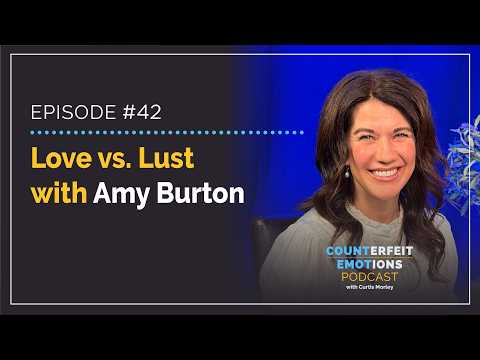
Counterfeit Emotions · Amy Burton
Amy Burton and Curtis discuss love versus lust, shame, body image, and relationships, including women’s experiences with pornography.

Counterfeit Emotions · Carrie Hill
Carrie Hill and Curtis explore how parents can respond to a child’s disclosure with compassion, openness, and care instead of shame.

Walking with the Savior
Explore the difference between love and lust in this faith-focused conversation.
Faith-focused conversation

Counterfeit Emotions · Joe Tuia’ana
Joe Tuia’ana shares the story behind the I Love You Bro Project. He and Curtis discuss vulnerability, men’s isolation, and the importance of human connection.
Faith-focused conversation
Includes discussion of suicide prevention and faith.

Curtis explores how shame, secrecy, and self-judgment can relate to patterns of pornography use.

Leading Saints
Curtis joins Leading Saints to discuss common assumptions about pornography recovery.
Faith-focused conversation

A conversation-inspired reflection on sobriety and what it can mean to work toward a different relationship with the behavior.
Beliefcast · Todd Sylvester
Curtis Morley joins Todd Sylvester for an episode of Beliefcast.

Explore the Counterfeit Emotions perspective on emotional needs, beliefs, and recovery beyond counting days.

Utah Coalition Against Pornography
Curtis introduces recovery versus sobriety and the Counterfeit Emotions framework.

Walking with the Savior
A Christian conversation about the role of faith in working toward recovery.
Faith-focused conversation

An introduction to the Counterfeit Emotions framework, including the four criteria Curtis uses to explore patterns of connection and disconnection.
Faith perspective

Practice naming what you feel and noticing what brings those feelings up, with simple prompts for exploring your own emotional patterns.

Curtis uses the experience of cycling together to reflect on brotherhood, shared effort, and the value of having support on your recovery journey.

Explore excellence without perfectionism, recognize your worth beyond performance, and approach mistakes as opportunities to learn.
Includes spiritual language

Explore how honest conversations can make room for connection, with attention to boundaries and choosing appropriate people and places to share.
Includes references to God

Use the R.E.S.P.E.C.T. framework to recognize your needs, communicate your limits, and practice boundaries with kindness.

Explore Curtis’s distinction between love and lust, including how seeing the whole person differs from treating someone as a means to an end.
Faith perspective

A personal reflection on finding meaning in difficult feelings and their connection to love, compassion, and growth. The invitation is to understand pain, not seek suffering.
Faith perspective
Try a broader search or another topic.
Selected from Counterfeit Emotions’ recovery resources and the Counterfeit Emotions podcast. New article links open on Counterfeit Emotions in a separate tab. Archived articles in the on-page reader retain their original authorship and publication dates. Conversations may include personal experiences and the perspectives of their hosts and guests.
These resources support learning and reflection. Coaching and education do not replace professional care.
Pause for a short reflection, explore your own patterns, or return to the free starting points.
From the Counterfeit Emotions archive
Sobriety is the first step to recovery, and it is a step that cannot be overlooked. Sobriety prepares the way for healing, like plucking out weeds before the ground is plowed and readied for a new crop. Taking that first step to healing is something to be celebrated and recognized as a valuable achievement. However, don't sell yourself short by stopping at sobriety. There is more healing to be done beyond sobriety and it is life-changing.
Healing from an addictive behavior begins with getting sober and is complete at recovery. Sobriety is resisting the behavior and putting up filters to keep the urges at bay. It does not address the underlying beliefs that fuel the need for the addictive behavior. In other words, sobriety addresses the symptoms and not the cause. Recovery is the stage of healing when a person completely overcomes their dependence on the addictive behavior because they have completely overcome the shame that was fueling the behavior. Sobriety treats symptoms, and recovery treats the cause.
I don't want to minimize the achievement of sobriety. It is a difficult, painful road that requires immense courage and strength. If you are sober (no matter the length of time), well done. That is not an easy feat. What I intend to share in this article is a message of hope. There is a more complete healing out there! There is a path that leads to joy and freedom from whatever addictive burden you may carry.
Sobriety laser focuses on the addictive behavior. That behavior and your ability to avoid defines your success. Every part of your journey to healing is tied to how many days you can avoid that behavior, and when you relapse, your journey resets.
When used as a first step, sobriety is a powerful tool. However, when this stage is your end goal, sobriety becomes a disheartening cycle of reaching for perfection and falling back down over and over.
Recovery doesn’t overlook the addictive behavior. It employs sobriety as a stepping stone to a more complete healing. What recovery focuses on is the shame a person is holding within themselves. It helps the struggling person face their shame and then clear it out.
When someone struggles with an addictive behavior, they are no longer in control of their behavior. They may be fully aware that what they are doing is harmful and dangerous and still be unable to stop because the behavior validates a deep shame that they have applied to their identity.
In serious cases of addiction, the person suffering from it is not addicted to a substance or a behavior, they are addicted to shame. When you hold a deep shameful belief about yourself, it is extremely difficult to accept anything that opposes it. For example, if a person struggling with an addiction believes that they are incompetent and lazy, it may be easy to use an addictive substance because that behavior confirms their perspective. It validates their shame. That same person may be unwilling to make healthier decisions or put forth effort to better their life because they believe it to be impossible for them anyway because they are “incompetent and lazy”.
We naturally accept things that are consistent with how we view the world and naturally dismiss and oppose things that are inconsistent with that view.
Recovery digs up the shame, digs up the damaging beliefs that we have formed during our lives, and then throws them out. When in the recovery stage, we open our hearts up. We take a good hard honest look at how we view our worth and let go of what is damaging so we can repair our soul.
If you are reading this as the loved one of someone who is struggling with an addiction, know that the most important thing you can do for them is to let go of your judgment. Muster all the compassion you have and let go of your frustrations. Let them know that you are here for them and if you can, be open to helping them face their shame. Allowing them to be fully honest with you will be scary and hurtful, but also incredibly powerful.
Complete healing is possible. Keep pressing forward.
Are you struggling to heal from a pornography addiction? Join our addiction recovery program, starting January 8th. Recovery is within your reach.
From the Counterfeit Emotions archive
Shame and guilt are often looped together as the same thing. They are actually profoundly different. Shame drives us deeper into that pit of self-doubt and isolation, and guilt propels us out of it.
Shame and guilt are the deciding factors between staying trapped in addiction and finding your way out
When talking to a group of teachers at a conference, Brené Brown said this: “Shame is highly correlated with addiction, depression, violence, eating disorders, and suicide.”
Shame is debilitating. It tears at our self-worth and stomps on our capability. Well, it can’t actually destroy our worth or capability. What shame really does is destroy our perception of our worth and capability.
Shame puts all the awfulness of our mistakes and other people’s words directly on us. If we do something dumb, shame tells us we are dumb. If someone tells us we hurt them, shame applies that mistake directly to our identity; it says, “You are someone that hurts people. You’re a monster.” Even when the things other people are saying about us aren’t true, shame chimes in with an unhelpful “You’re unlikable.”
This negative self-talk that shame spews is a potent force that increases our risk of developing an addiction and our risk of staying trapped in addiction.
Shame’s beatdowns are agonizing. And when shame is the prominent voice in our heads, it’s almost unbearable, which drives us to find external forces that can numb and quiet shame’s words. That is how shame drives us into addiction. Its demands for reassurance can never be satisfied, so we look for buffers to muffle the noise. We may bury ourselves in drugs, pornography, social media doom-scrolling, and any other addiction you can think of to shut shame up.
When already in an addiction, shame’s insatiable demands for reassurance keep us there. We may be completely aware of the destruction our addiction is causing and still fall back into the behavior again and again. Because shame leads us to believe that we are nothing more than our behavior, so there is no way we have the strength or capacity to overcome it.
Brené Brown’s quote continues with this: “And here’s the big piece you need to understand: guilt is inversely correlated with those outcomes… As it turns out, many researchers argue that guilt is actually a protective factor against things like addiction.
And here’s what a study from the National Library of Medicine has to say about the guilt and shame:
“Previous research has demonstrated that shame-proneness (the tendency to feel bad about the self) relates to a variety of life problems, whereas guilt-proneness (the tendency to feel bad about a specific behavior) is more likely to be adaptive… Across samples, shame-proneness was generally positively correlated with substance use problems, whereas guilt-proneness was inversely related (or unrelated) to substance use problems. Results suggest that shame and guilt should be considered separately in the prevention and treatment of substance misuse.”
Guilt is protective against addiction, and guilt is adaptive to adversity. Shame destroys our self-confidence and guilt builds it.
Instead of focusing the unpleasant attributes, consequences, and implications of our mistakes (and any other sources of unpleasant feelings: others’ opinions, our environment, unlucky circumstances… etc.) on ourselves, guilt applies it all to the mistakes. “I am not dumb, my behavior was dumb.” “I am not unlikable, those people just don’t like me.”
Guilt takes a healthier approach to the world than shame does. It clearly sees the wrongness and dumbness and hurt of our actions and the influence of the people and things around us, but it does not apply that wrongness and dumbness and hurt to our identity. Instead, it applies them to their sources. Because of this, guilt does something amazing for us; it upholds our beliefs about ourselves and our capability while also allowing us to see the things that need addressing in our lives. It says, “This is wrong, and you can overcome it.”
When we are addicted to something and shift our perspective to guilt instead of shame, the truth of our addiction (which was once debilitating) becomes a motivator that pushes us to do and hope for better.
Shame is the direct path to destructive behaviors like addiction, bullying, drug use, sexual promiscuity, and many others. Guilt is a direct path out.
Shame drives us into addiction, and Guilt emboldens us to climb out.
Related articles:
From the Counterfeit Emotions archive
“I can’t believe I did it again. The last time was supposed to be the 'last time.' Why do I even try? It feels like I will never overcome this addiction. I feel so stupid. I can’t believe I screwed up one more time. I had the filters in place. I was doing what was right.”
These words were followed by an unfathomable concept.
“What if you were grateful for your relapse instead of beating yourself up about it.”
“What are you talking about? How could I ever even imagine being grateful for the thing that is ruining my life? Seriously, you want me to be grateful that I looked at pornography?”
“No, not grateful for the pornography, grateful for the message that came with the relapse.”
“You’re not making sense.” (The shame was almost overwhelming at this point)
“Yes, pornography is destructive. It damages the brain, our relationships, and destroys our peace. That’s not what I’m talking about. What I’m talking about is getting down on your knees and praying in gratitude, not for the porn, but for the relapse.”
“This relapse is killing me. Why would I ever be grateful for it?”
“Because you just got one of the greatest gifts you can ever be given. You just got the exact location of the place you need to start digging in your soul. You just got a pin in your own personal map to the exact GPS coordinates you need to drive to and start doing the work. For this, you can always be grateful. You can always say thank you for this pinpoint knowledge of where you need to start digging up your demons. You now know where to start healing.”
That’s when it all changed. The relapse became a way to heal instead of a shame bomb that spiraled out of control. I didn't have to believe the lie of sobriety anymore that if I relapsed my worth is reset and I “should” be ashamed. Sobriety is the Counterfeit of Recovery. Sobriety is not about true cleaning out our souls. it is about suppressing the demons still trapped inside.
Nothing illustrates this better than one’s relationship with relapse during sobriety as opposed to one’s relationship with relapse during recovery. In order for true and complete recovery, sobriety can not be the end goal because it alone cannot provide complete healing. Let’s take a look at the definition of sobriety to see why that is.
In the words of Todd Sylvester, host of “Beliefcast”, sobriety is “the time between relapses.” Sobriety defines your success and your worth by how long you can refrain from using or engaging in the addictive substance/behavior until you slip up again. In other words, your worth hinges on the amount of time you are able to suppress the demons inside until one finally slips out again. Sobriety is marked with bookends of relapse. Sobriety anticipates and even expects relapse and also says your “Worth Clock” now has to reset at 0:00. This is not a sustainable way to live.
Please understand, it is incredibly difficult to get sober and stay sober. If you are someone who has made or is making the effort to stay sober, I commend you for your strength. Keep the momentum and never stop striving. At the same time, please know there is a better way that doesn’t have to involve a daily battle.
It Gets Easier (Because of What Happens During Recovery)
Many people healing from an addiction put in the effort to get sober and are discouraged by how difficult it is to stay sober. It’s common for people who have been sober for years to still struggle every single day to maintain their status as “sober” and get their next coin at the SA meeting. They think that because of their past decisions, they are now convicted to a life sentence of imprisonment to addiction and hard labor. They feel like they have to live with the terrible effort of running from the urge every day for the rest of their life. You may feel this way right now.
This simply isn’t true! When the need for the behavior disappears the behavior also disappears.
Our Relationship with Relapse
As mentioned earlier, In a sobriety mindset, your success hinges on your ability to avoid relapse. Once you relapse, your progress resets and you start back at square one. The stopwatch button is pressed and you go back to zero. Relapse is often devastating to someone who is sober. It may cause them to feel like a failure and discount all of the work they put into staying sober, and they may even give up on the healing journey entirely. You may have felt that after a relapse all of your hard work disappears the second you stumble. Time to reset the clock. 0:00
That does not mean that sobriety isn’t important. The entire goal of healing is to remove the need for the behavior rather than just changing the behavior. The focus is on a very different spot. Sobriety is important especially for the first two weeks to two months when the dopamine dependency cycle is resetting. However, what isn’t helpful is measuring your healing in terms of intervals of sobriety. The behavior is not the issue. Pornography could be replaced with drinking, drugs, gambling, shopping, excessive exercise, etc... etc... etc.. The issue is not the pornography. The issue is the emotion that is driving the need to look. What event in your past created a belief in you that is so hard to deal with that it is easier to distract and numb instead of facing it? What false narrative are you telling yourself that drives the behavior of looking?
Addiction is a symptom of an underlying problem with shame and pain avoidance. A person’s amount of and relationship with shame is a main driver for the need for the addictive behavior. So when we are in the sobriety stage, we are measuring our success by our ability to suppress our symptoms and we don't address the real issue, the emotions, at all. That is why sobriety can not be the end goal.
When in recovery, relapse is not devastating like it is in sobriety because it doesn’t signal a failure. Instead ,those in recovery find gratitude for the message that comes with the relpase. Sobriety is destroyed with a relapse. Recovery is enhanced with a relapse.
When someone in sobriety experiences a relapse, they often continue to spiral and have a very difficult time picking themselves back up to try again. Recovery is different because success is defined in terms of healing, not by a timeframe of avoidance.
During recovery, relapses act as helpful landmarks that help us to identify where we need to be focusing our energy. The triggers put up flags within our hearts where demons are still lurking like push pins on a map so we can turn to that location and dig up the shame.
The way recovery works is by identifying and facing our shame and pain. We pay attention to what kinds of things trigger us and what kinds of thoughts we have about ourselves when triggered. Then we pull those thoughts out into the light and make peace with them. This is done by admitting the wrongs without shame, then reframing the thoughts.
Recovery is the practice of making peace with our shame by challenging the validity of its attacks on our worth and replacing them with a more compassionate narrative. I like to go to call this “Inviting my Demons to Lunch,” similar to a tale about Buddha told by Tara Brach called, “Inviting Mara to tea.”
In the story, Buddha is working hard to transcend. Each time he is about to transcend his enemy Mara, a demon god, attacks the Buddha preventing him from his transcendence. The Buddha's assistant, Ananda, sounds the battle cry each time he sees the terror approaching and they pick up their weapons of war and ward off each strategically timed assault. This prevented the Buddha from the enlightenment he is seeking so diligently to find. One day, Ananda sees the "Evil One" galloping towards them with weapons brandished high. He runs to tell the Buddha, who is wonderfully near his goal -- it is time to once more fight off this unrelenting knave. This time the Buddha does not pick up his swords and scimitars but rather instructs his attendant to invite Mara in for tea. In an astonishing turn of events, he then he sits down with Mara and serves him as an honored guest and says, “I see you.” He accepted Mara into his home. He acknowledges Mara just as he is still holding the weapons of doubt, shame, fear, lust, and greed. By accepting him he neutralized the threat and creates an emotionally safe place in which he could finally transcend.
By acknowledging Mara and the intentions behind Maras's prompts for anger and doubt, the Buddha dismantles Mara’s attack with compassion and understanding.
It works the same way with our own demons that try to attack us with shame. When we acknowledge them (“I see you”) and understand why they feel the way they do, and how they are actually trying to protect us, we can use compassion to let their harmful beliefs go.
Relapses show us exactly where our demons are hiding. And because of that we can be grateful for our slip-ups and use the information they provide to accelerate our healing. Your relapses do not define your worth, they only define the work ahead of you.
So, the next time you find yourself struggling, consider pausing. Invite those difficult feelings in, ask them what they’re here to teach, and let your relapse guide you toward deeper healing. Your worth doesn’t start over at zero. It grows every time you choose recovery over shame.
Are you struggling to heal from a pornography addiction? Join our addiction recovery program, starting January 8th. Recovery is within your reach.
From the Counterfeit Emotions archive
Human beings learn by experience, so it is natural for us to make mistakes. Taking wrong turns is a valuable part of the growing process.
Shame is the enemy of growth. Nothing stunts our progress better than shame. It sucks the air out of motivation and pokes holes in our inspiration until we deflate completely. Shame attacks our self-worth until we are convinced that we are not meant to go on. We are! We are meant for great things! Shame is a liar. Throw it out of your life.
The following 7 steps will help you build healthy habits when addressing mistakes. Feelings of shame enter our lives through a variety of different avenues, but this article focuses in on shame that is connected to mistakes. If you struggle to accept your mistakes and move on to become better and healthier, read on!
Guilt plays an instrumental role in these 7 steps. Don’t get guilt confused with shame. Healthy guilt views the mistake with responsibility, compassion, and hope. It addresses the real problems with what has happened and extends grace, allowing us to move beyond the mistake.
So you’ve made a mistake. That’s okay, it’s a perfectly normal part of progressing through life. But it doesn’t do you any good if you don’t use it to grow. Growing is the whole reason we are here on this earth! We are here to become something greater than we were before.
The first step to turning a mistake into growth is recognizing the wrong. This is the reality check, the moment we step back and view the situation with a realistic perspective. The key word here is reality.
Shame attempts to distort our view of the events and bury us in condemnation. The reality is that we are not responsible for the actions of other people and our worth is not dependent upon how favorably or unfavorably we act. We are not responsible for the actions/reactions of other people and our worth is unchanging.
When we recognize a wrong, we acknowledge our own actions to be wrong. We do not make excuses and we do not attribute the mistake to our worth or character. The action was wrong; it does not mean that there is something wrong or broken about your worth or character.
You are a good/competent/kind/knowledgable person who has stumbled and maybe even fallen.
There is no shame in that because to be human is to make mistakes.
Guilt is a necessary part of turning mistakes into growth. It is important to note that guilt and shame are fundamentally different. Shame punishes and reinforces the belief that the person feeling it does not have value (do you see how that is harmful?). On the other hand, guilt alerts us of behaviors that do not align with our values and motivates us to repair them (do you see how that facilitates growth?).
Shame is unhelpful. We don’t need it in our lives.
Guilt helps us live more authentically because it helps us live in line with our values.
The pain of guilt is unpleasant, but ultimately beneficial because after we feel the pain we are able to grow and leave the guilt behind.
There are many, many beneficial growth processes that begin by causing adverse effects, the most well-known being exercise. The immediate effects of exercise are unpleasant (fatigue, shortness of breath, sweating, increased heart rate). However, the immediate effects don’t last, the long-term effects do. The long-term effects of exercise (strong bones and muscles, healthy organ functioning, decreased anxiety and depression) are very beneficial for our health and they even mitigate the adverse immediate effects to some degree.
Guilt works in a similar way. The immediate effects are unpleasant (embarrassment, disappointment, fear), but they fade. And the long-term effects are beneficial (stronger trust within the self and relationships, learning, increased resilience).
The feeling of guilt alerts us that our behavior was not in line with our values and ties that behavior to an unpleasant emotional experience to create a stronger memory (so we will be less likely to repeat the behavior). Growth is uncomfortable. Embrace it.
Shame tries to convince us that we must hide our mistakes, so to combat that, we embrace them. Remember, our mistakes have nothing to do with our worth or character. We can be honest about our mistakes and remain sure that our worth remains unchanged.
Revealing our mistakes dissolves the isolation of shame, and connects us to other people. We have all made wrong turns whether big or small. No one is alone in this.
“Shame loses power when it is spoken”
~Brené Brown
We are responsible for our own actions and not one else’s. Even if our actions are what prompted the actions of other people, we are not responsible for others’ behavior. Be accountable for your own actions and accept the consequences.
Do what you can to repair and repay. This will look different in every situation, but it usually consists of an apology (maybe a few) and a change in future behavior. Do what you can to repair the trust that was broken by behaving in a way that shows you are trustworthy.
At this point, if you have followed the rest of the steps, then you have done all you can. Now it is time to let go of the guilt and surrender it to God. Release the weight of your mistake and have confidence in your growth.
If you have done all that you have moved through all of the previous steps and still feel bad, that’s shame. You can let it go.
Shame loves to make us relive our mistakes, pick apart every wrong step, and cover us in blame over and over and over until the weight is crushing. Reliving a mistake over and over is unnecessary. We only need to do it once.
After you have surrendered the guilt (and any lingering shame), go back to the situation in your mind. This time, view yourself with objective compassion and understanding. You chose to do something that you wish you didn’t do. That’s okay, you are human. Release all judgments and refrain from analyzing your wrongdoing (you’ve moved beyond it already). Instead, imagine how you wish you would have behaved. Rewrite the moment to be healthier and in line with your values.
You are capable of being the person that reacts in that healthier way, because you now possess the knowledge and tools you need to do so.
Guilt facilitates growth, allowing us to live in truth. In other words, guilt helps us to live in authenticity.
Guilt allows us to move forward with a clean conscience. Hold your head high and embrace the gift of guilt.
For a deeper dive into the power of guilt, try our self-paced course here.
Related articles:
From the Counterfeit Emotions archive
When a husband or boyfriend struggles with unwanted pornography viewing, it can be deeply painful and challenging for a woman. Please know his behavior is not your fault, it is not your responsibility, and yet it is an opportunity. Your support can play a significant role in his journey toward healing and true recovery. It is easy to think that there is something you could have done to prevent this or if you dressed up more, wore different makeup or were better in the bedroom he wouldn’t have this issue. This is not true. In fact, this challenge doesn’t have anything to do with you and it has very little to do with pornography. Most men aren’t addicted to pornography, they are addicted to shame. Regardless of the reason someone starts looking at pornography, the reason they stay in the patterns is because shame keeps them trapped in the same cycles of destructive behavior. Breaking the shame cycle releases that person from the need for the behavior.
Recently as part of an eight week recovery program I asked some amazing spouses to come talk to the group about what wives can do to help(not fix) their husbands with this challenge.
Here are eight practical ways to help your husband while maintaining your own emotional health:
This is so easy to do. It is in no way your fault. This is an issue of the shame inside your partner. He has probably been carrying this for years before he met you. It would be easy to say if I were prettier, or I loved him more, or I was a better wife/girlfriend that he wouldn’t have this problem. This is a lie that doesn’t serve you. Your man’s struggles with pornography are not a reflection of your worth, attractiveness, or value as a spouse or girlfriend. His behavior has nothing to do with you. It is an issue of him not being able to process emotions like shame, fear, and pain in healthy ways.
5. Get Curious With Him and Yourself
One of the best things you can do for him and for you is to dig into the trigger for each of you.What was his trigger before the unwanted behavior. Allow him to teach you what he’s learning about himself. It may be tempting to talk about the viewing behavior and barrage him with questions about the details of his viewing. This won’t help him or you. Instead, focus on the emotions before the unwanted behavior. Find out the triggers and address that. Once the trigger is no longer a trigger the behavior will no longer be a behavior. This is where he will make significant progress toward healing. Then, ask yourself what stories make it triggering for you. What fears are you experiencing each time a lapse in judgment happens?
6. Give Yourself Grace and Let Yourself Feel What You’re Feeling
Your emotions are valid and need to be addressed and expressed in healthy ways. Feel each emotion deeply. Suppressing those emotions can lead to resentment and even health issues. If needed, find a good therapist or healing program for yourself. The truly helpful ones will be a counselor or program that specializes in recovery and not just sobriety. Work through your unique set of emotions. Practice daily self care including breathing, exercise, proper nutrition, journaling, meditation, and rest. When big waves of emotions do come up (even when you thought you had already worked through them) give yourself permission to feel and then move on to step seven.
7. Find a Friend to Talk to When You're Triggered
Find a grounded friend to talk to other than your husband or boyfriend (until you're both in centered places). Just like you are not responsible for your partner's emotions or actions, he is not responsible for yours. Sometimes you need a trusted confidante to be a sounding board to work through and understand some big emotions you may be feeling before coming back together with your partner. Choosing a centered friend that will help you see truth in love is critical. Avoid bashing your partner when talking to a friend as that will be destructive to the relationship.
Once you and he both get centered and feel that you can approach the issues from a neutral place, then address the concerns together. Instead of coming from a combative place, both of you are working for a solution. Instead of blaming or seeing him as the enemy you can get the assistance of a friend to help you get on the same side as your partner.
8. Celebrate Progress Together
Recovery is a journey, and small victories matter. Celebrate milestones together. For example, a breakthrough in therapy or processing a trigger so it no longer leads to the behavior.. Acknowledging progress can build hope and reinforce positive change. It will also show that you are invested in his progress and you want to go on this journey together.
For additional resources here is Britt Mai’s recommended book list:
1) Sex Addiction 101: A Basic Guide to Healing from Sex, Porn, and Love Addiction (R. Weiss)
2) Your Sexually Addicted Spouse: How Partners Can Cope and Heal (B. Steffens and M. Means)
3) Mending a Shattered Heart: A Guide for Partners of Sex Addicts (ed. by S. Carnes) (Britt recommends starting with this one if the betrayal discovery is recent, you’re feeling overwhelmed, and wondering where to begin!)
4) Moving Beyond Betrayal: The 5-Step Boundary Solution for Partners of Sex Addicts (V. Tidwell Palmer)
5) Facing Heartbreak: Steps to Recovery for Partners of Sex Addicts (M. Lee, S. Carnes, and A. Rodriguez)
6) The Body Keeps the Score: Brain, Mind, and Body in the Healing of Trauma (B. van der Kolk)
Thank you to this weeks guest contributors
Patty Morley
Bonnie Siulua (Soul+Soul)
Brit Mai
From the Counterfeit Emotions archive
Most men I've worked with don't have a problem with pornography; they have a shame issue. They exhibit the behaviors without being clinically addicted. In fact, there is no diagnosis in the DSM5 for pornography addiction.
I often hear, “We need to fix this pornography problem.” The trouble is you can’t fix pornography. More importantly, the problem is not pornography. The problem is the shame behind the pornography. The word Pornography could be replaced with any other behaviors like “Gambling”, “Drinking”, or even “Shopping.” Viewing pornography is a behavior and behaviors can change. Pornography is not the problem, shame is the problem. The behavior is simply a manifestation of shame.
What I have found to be true, is that changing this behavior requires one to first heal from shame. Sobriety allows for a person to abstain by white-knuckling without true healing. Recovery focuses on the motivation for the behavior rather than the behavior -- and that motivation is most often based in shame. Without shame, the road to true overcoming is accelerated dramatically.
Shame wreaks havoc on the way we view our worth. Shame is the counterfeit of Guilt. Guilt says I've made a mistake. Shame says my existence is a mistake. Guilt speaks about a changeable behavior. Shame labels our character as unchangeable. Shame is one of the lowest frequency emotions we can feel. This is the problem. Pornography is not the problem. (Don’t get me wrong. I’m not endorsing it in any way. It is destructive to the brain and relationships.)
“If you put shame in a petri dish, it needs three ingredients to grow exponentially: secrecy, silence, and judgment.”
~ Brené Brown
The reason shame traps us in pornography is because pornography matches the three ingredients of shame so well.
Gambling, alcohol, and even shopping all have a public aspect to them. Pornography is almost always done in secret. It’s usually done late at night under the veil of secrecy. Pornography above all other addictive behavior is the one hidden the most. It’s a private problem that is not typically done with others. Browser histories are deleted to maintain the covert nature. Excuses are made to maintain the guise. Cloak and dagger techniques are deployed to keep the action surreptitious.
Looking at all of the addictive compulsions, the one least talked about is pornography. People talk openly about their drunkenness and even celebrate it at frat parties. Gambling is celebrated on TV specials as risky and adventurous. Illegal drug use has been discussed ever since First Lady Nancy Reagen had us chanting “Just Say No” in schools across the country. Pornography isn’t openly talked about. It’s a truly taboo topic in our society. Outside of the walls of a church building it isn’t discussed much if at all. And even within the hallowed halls it is talked about in very discriminate and round about terms.
Sexual indiscretions are judged much more harshly than someone that drinks. A regular drunk is almost accepted as just a clumsy oaf, whereas someone that looks at pornography is looked at as dirty, filthy, and a pariah on society. Judgment of someone who has looked at pornography is much more cruel and severe. We judge ourselves as needing more proverbial stripes for this than most other behaviors. Even well intentioned programs like Sexaholics Anonymous add shame as one of the first things said in the weekly meetings. “Hi. I’m __________ and I’m an addict." This is a very judgmental and shaming label and is frankly not true. You may have engaged in addictive behavior but your true nature is not that of an addict.
Using these criteria we can look at the truth of the situation and ways to overcome this three headed dragon called shame.
Bring it into the light. One of the main reasons the twelve steps is effective is because of step 4 - “Made a searching and fearless moral inventory of ourselves.” This brings the past behaviors into the light. Writing down each instance line-by-line is courageous and cleansing. Making that inventory obliterates the secrecy behind the actions. Step 4 along with Step 5 of the twelve steps removes the hiding and covert nature, revealing a complete inventory of times, methods, and severity.
Talking about the problem removes the silence shame needs to survive. Because of organizations like Fight the New Drug (Phase Alliance) and others founded by Clay Olsen, the world is becoming more open about discussing this problem in honest ways. As an individual breaking the silence is key to true healing. One of the most critical ways to remove shame is to break the silence. Referring back to the twelve steps, Step 5 says, “Admitted to God, to ourselves, and to another human being the exact nature of our wrongs.” Sharing Step 4 with others creates a new mentality of safety and vulneraility. It reveals that we are ok even if our behaviors are not. Sharing our past opens the dialog, always us to surrender, and kills the silence shame needs to survive.
Realizing that the problem is not pornography alleviates much of the judgment. Knowing the behavior is harmful without attributing those actions to our character creates less negative self talk and allows for compassion. Brene Brown added to the end of the previous quote, "If you put the same amount of shame in the petri dish and douse it with empathy, it can't survive."
When shame is spoken about, uncovered, and met with compassion, it disintegrates at an incredible rate. The way to get rid of shame, even deep-rooted shame, is to find a safe space and talk about it, write about it, and confront it. After all, "Fear falters when faced."
You are not addicted to pornography and it's time to stop feeding your addiction to shame,
From the Counterfeit Emotions archive
Recently I had the privilege of talking with Todd Sylvester on his podcast, “Beliefcast”. After struggling with a drug addiction for 10 years, Todd found his way out and has now been clean for 34 years. He now helps others on their path to recovery by sharing what he’s learned along his own journey.
What intrigued me the most about our conversation was Todd’s definition of “sobriety.” He defines sobriety as “the time between relapses.” Sobriety is however long you manage to hold the demons back before they break out again.
It’s a vital part of healing from an addiction, but getting sober is only the first step to healing; it is not the destination. When in the sobriety stage, you are only a few steps away from a relapse. It doesn’t matter if you have been sober for 5 days or 5 years, you are still only a few steps away.
There is a very common belief I hear from people who have gotten sober from an addiction. When they give up their addiction, it’s really tough. Which is normal, but they assume it will be like that for the rest of their life. Because they had fallen into an addiction, they would now forever be running from it. It doesn’t have to be that way because there is healing beyond sobriety!
Imagine you are driving a car. The sobriety stage of battling an addiction is like driving a car on a mountain road. There is a fence and plenty of yellow signs pointing you in the right direction, but with a slight turn of the steering wheel, you could careen off the cliff edge. Again, it doesn’t matter if you’ve been driving that road for 5 days or 5 years, the cliff edge is still just a small turn away.
Complete recovery is like driving down the mountain to the middle of an Oklahoma road that is flat, open, and has no cliff edges. When you recover from an addiction, the dependency completely disappears.
Sobriety is all about limits and filters that make it harder for someone to fall back into their addictive habits. It focuses on the addiction and uses the addictive behaviors to measure the success of the struggling person. The person’s entire healing hinges upon how long they can stop themselves from doing the addictive behavior. The problem is that before a person has fully recovered from an addiction, relapses are inevitable.
When you define your healing by how long you have been sober, a relapse is devastating. And instead of a relapse encouraging you to try harder, it destroys your confidence and you spiral all the way back to where you started.
Sobriety is important, but the faster we can shift our focus from the addiction to the person, the better. What I mean by that is, stop trying to fix the behaviors of addiction and start exploring the beliefs that drive the need for the behaviors.
Addiction is a symptom of a bigger, more pervasive problem: shame.
Recovery is the process of healing the shame that drives addiction. Addictions fill up the holes in our worth with pleasure, numbness, and comfort to relieve us of our shame for small moments of time. That is why people fall into addictions. Because there are holes in their worth that they are trying to escape.
To fully recover from an addiction, we must confront those holes (that shame). We have to look our shameful demons in the eyes and deconstruct their lies to uncover the truth.
The truth is, there are no holes in your worth. Your faulty beliefs make you feel that way, but you’ll come to see that your worth cannot be bent, destroyed, or even altered at all. You are and will always be invaluable. Your worth is beyond comprehension.
To reach recovery, face your shame, and tell it the truth: “I am more than you say I am.”
Reframing your perspective to see your true worth is what brings you away from the cliff edge, down the mountain, to the middle of Oklahoma where there is no edge to fall off of.
Are you struggling to heal from a pornography addiction? Join our addiction recovery program, starting January 8th. Recovery is within your reach.
From the Counterfeit Emotions archive
There are major misconceptions that keep people trapped in emotional cycles, and one of the biggest counterfeits is sobriety masquerading as recovery. Sobriety is often viewed as the ultimate goal in recovery, but what if sobriety alone isn’t enough? What if, by focusing solely on sobriety, we are counterfeiting true recovery? While sobriety is a critical first step, it is not the destination. True healing requires going beyond abstinence and addressing the deeper issues fueling addiction. In the case of pornography or similar behaviors, the unwanted action itself is rarely the core issue. The real issue is the underlying need driving the behavior. Sobriety alone can never resolve the problem because it does not address these deeper needs.
Sobriety involves resisting or suppressing addictive behaviors, typically through external measures such as accountability software, support groups, or sheer willpower. However, sobriety alone does not address the root cause. It merely suppresses the behavior temporarily. Like a beach ball underwater, the deeper it's pushed, the greater the pressure builds until it inevitably resurfaces. What we resist persists. It's time to stop resisting and start understanding.
Sobriety can be imagined as pushing down our internal demons, whereas recovery involves pulling those demons out into the open and engaging directly with them. When we confront these "demons," we discover they aren't demons at all but protective parts of ourselves, shaped by past trauma and negative core beliefs, that simply lack healthier coping mechanisms.
Recovery is about sweeping the cobwebs from our souls. It involves confronting and healing core emotional wounds and beliefs driving the behavior. Recovery targets the root causes that keep individuals trapped in destructive cycles, such as deep-seated shame, feelings of unworthiness, or unresolved trauma.
Sobriety measures duration; recovery measures depth. Sobriety without recovery creates a continuous, miserable battle against temptation. If underlying emotional wounds remain unaddressed, they manifest in other destructive behaviors or lapses in judgment. Removing the behavior does not remove the underlying need.
For example, someone struggling with pornography who deeply believes they're unworthy of love will find that merely avoiding pornography does not change that belief. The shame remains, waiting to surface elsewhere. Real recovery heals this shame, eliminating the behavior's purpose.
Many programs focus solely on sobriety because it is measurable. Abstinence durations can be quantified in days, weeks, or months. There's also a societal misconception that eliminating the behavior solves the problem. However, unresolved internal wounds remain active beneath the surface, awaiting a moment of vulnerability to resurface.
A friend shared an experience involving his father, who had been an alcoholic most of his life. When his brother faced a similar challenge, they attended a recovery program together. After five years of sobriety, he asked his father about his last urge to drink. His father couldn’t recall. When he asked his brother the same question, the response was starkly different. His brother confessed he'd wanted a drink just fifteen minutes earlier, and every day for the past five years.
This illustrates the crucial difference between recovery and mere sobriety. There's no direct correlation between the length of sobriety and the depth of recovery. Sobriety’s main purpose is breaking the dopamine dependency cycle, which, according to Anna Lembke, author of Dopamine Nation, lasts only about two weeks: "...after about two weeks, the pleasure-pain see-saw in your brain will restore its natural balance, allowing you to enjoy more modest rewards."
The belief that addiction is a lifelong sentence stems from outdated models introduced nearly a century ago, around 1930. Most people struggling with unwanted pornography use aren’t clinically addicted, yet this mentality persists. Neuroscience has greatly advanced, improving our understanding of dopamine cycles and mental health, revealing that this outdated mindset perpetuates the problem. Labeling someone as an "addict" is akin to branding them with a modern-day "scarlet letter," a shame label. Although habitual behaviors form neural pathways making lapses easier, neuroplasticity, the brain’s ability to rewire itself, means complete healing is possible.
Viewing oneself as forever an addict traps individuals in cycles of shame and helplessness. Recovery reframes each lapse as an opportunity for growth, emphasizing transformation and freedom.
Recovery is grounded in hope, while sobriety is often driven by fear. Sobriety alone is miserable, characterized by constant struggle and suppression. Each day begins with anxiety: "Is today the day I relapse?" This fear-driven mindset persists as long as unresolved trauma fuels the need for harmful behaviors. Recovery, however, fosters hope, peace, and genuine excitement for life, resolving issues so triggers no longer provoke the same urges.
Myth: Once an addict, always an addict.
Truth: Real recovery eliminates the shame driving destructive behaviors, enabling complete healing, potentially within as short a period as eight weeks.
Myth: Sobriety is the ultimate goal.
Truth: Recovery is the true goal. Sobriety is only a starting point and can become a trap if viewed as the endpoint. Recovery, a life without the fear and misery of mere sobriety, is the genuine objective.
Myth: Willpower is enough.
Truth: Real recovery isn’t about willpower; it's about healing underlying emotional and psychological wounds. Recovery requires discipline initially but eventually eliminates the need for sheer willpower.
Myth: Relapse (lapse) means failure.
Truth: Relapse is often part of the recovery journey. In recovery, lapses become valuable opportunities for growth rather than devastating setbacks.
Recovery isn’t just about stopping a behavior. It’s about addressing shame, properly processing triggers, and healing emotional wounds. It’s about embracing a joyful and fulfilling life, free from pornography. If you're struggling, know real healing is achievable.
If you’re tired of the constant struggle and seek lasting freedom, transformation is within your reach. Are you ready to move beyond mere sobriety into true recovery? Join the Counterfeit Emotions pornography recovery program starting March 26th.
Find out more at counterfeitemotions.com/recovery.